The term pelvic floor refers to the area at the bottom of the pelvis: the area we sit on, the one we all pass through on the day we are born, and the one our bodily waste passes through all our lives.
01What does the pelvic floor do in our lives?
All our pelvic and abdominal organs rest on the pelvic floor. It lets us "hold on" and control our bladder and bowels, and it is part of our postural muscle system, so together with the abdominal and back muscles it protects the spine (hence the link to back pain). The pelvic floor is also directly linked to our sexual function (erection and orgasm) and to the process of giving birth.
02What is the pelvic floor made of?
The pelvic floor is shaped like a hammock (despite the name "floor"), and it is made of soft tissue only – muscles, connective tissue and, of course, the blood vessels and nerves that supply the whole area. Most of the pelvic floor muscles are voluntary, which means we can control their contraction and relaxation, and we can strengthen them (just as we strengthen any other muscle at the gym). Some of these muscles are there to "close" (for example, closing the openings so that nothing escapes), and some are there to "lift and open" (for example, when emptying).
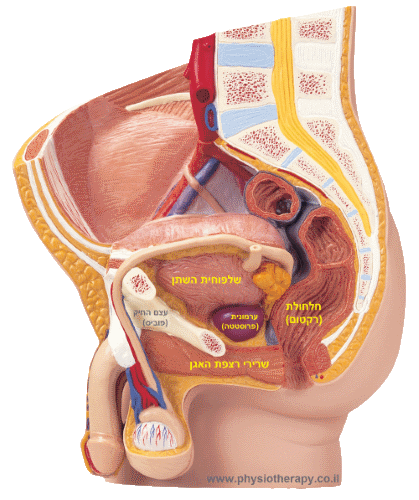
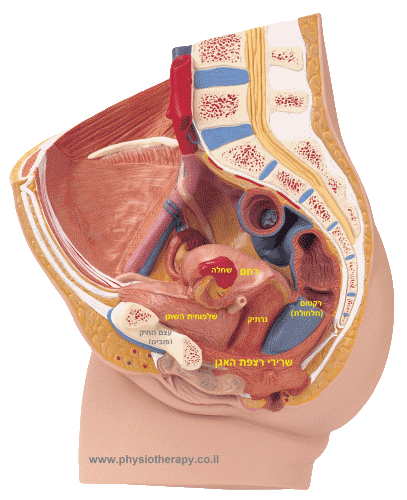
The pelvic organs (male)The pelvic organs (female)
03Why do the pelvic floor muscles matter?
As the supporting base of the pelvic organs, the strength of these muscles affects the normal position of the pelvic organs: the bladder, the uterus, the bowel and the rectum. In daily life, weakness and slackness of these muscles cause varying degrees of loss of bladder and bowel control, urinary incontinence, leakage of stool or gas, hemorrhoids, and prolapse of the bladder, uterus, bowel or rectum. Another kind of pelvic floor dysfunction is over-contraction of some of its muscles (sometimes compensating for weakness in another part), which shows up as difficulty emptying (urine or stool) or as pain during intercourse. Pelvic floor physiotherapy makes it possible to strengthen the pelvic floor muscles and so to prevent these problems.
We use cookies and other technological tools to tailor the site to you, improve your browsing experience and offer more relevant marketing content. Continuing to use the site constitutes consent to the use of these files, in accordance with our privacy policy.